
Epoxy Garage Flooring Contractor in Lexington, MA
Professional Installation by Mad Garages and Closets
Here is the call an epoxy garage flooring contractor fields most often. A homeowner had their garage floor coated two or three years ago. It looked right the day the crew left. Now pale patches shaped like tire contact areas sit where the cars park, and the edges curl. Nobody spilled anything. It simply started letting go.
Hot-tire pickup does that, and it points backward at three earlier decisions. Tires warm up on a commute. Warm rubber softens a thin coating enough to grip it. Back out, and part of the floor leaves with the tire. Three things allow it: concrete that was etched instead of ground, film laid too thin, and a floor driven on before it finished curing. All three were chosen before the first can was opened.
Read this page as those three decisions, in the order they get made.
Decision one: how the concrete gets opened
Epoxy garage flooring does not stick to concrete. It sticks into it. The sealed top skin has to come off and the pores underneath have to open evenly, which is the entire purpose of surface prep.
Acid etching washes the surface chemically. It is cheap and needs no equipment, and it works unevenly. It bites hard into soft areas, barely touches anything power-troweled, and skips the perimeter where the wash never sits long enough. Diamond grinding cuts mechanically instead, taking the skin off at a controlled depth across the whole slab, corners and wall edges included. It also strips old paint, old sealer and any previous coating in the same pass. Ask any garage flooring contractor which method a quote assumes, because a floor that was etched rather than ground is the most common reason a coating lets go early.
An attached garage raises a second question. Grinding concrete throws off a great deal of very fine silica, and the garage shares a wall and a door with living space. Ask how the dust is contained and where the overhead door sits while the work runs.
Why Lexington Homeowners Choose Epoxy Garage Flooring
Decision two: which coating system goes down. People use the word epoxy loosely, meaning any resin floor. Residential work really uses two families, and they behave differently enough that the choice is worth making yourself.
Epoxy does the heavy lifting. Thicker build, an excellent bond into properly ground concrete, lower material cost, slow cure. The slow cure catches people out. Foot traffic returns well before vehicles do. Epoxy also ambers slightly under strong sun over the years, which matters if the garage door faces south and stands open on weekends.
Polyaspartic cures fast. As a polyurea it goes down in a much shorter window, tolerates colder concrete, holds color under UV, and costs more per square foot. Anyone honestly promising a one-day floor means polyaspartic, and one very disciplined day at that.
Good systems often use both, with an epoxy body coat for build and bond and a polyaspartic clear on top for speed and color. Ask which resin sits in which coat before you sign for epoxy garage flooring. A vague answer is itself an answer.
Exceptional Durability
Durability in epoxy garage flooring covers four separate things. Abrasion from grit under a tire. Impact from a dropped socket. Chemical exposure from brake fluid and de-icer. Heat off a tire that spent forty minutes on the road. A thicker film handles impact and a hard clear topcoat handles abrasion, and together they handle the tires. Ask about film thickness in mils rather than about brand names.
Easy Maintenance
Cured epoxy garage flooring holds no pores, so nothing soaks in and nothing needs scrubbing out. A dust mop covers the week. A flat mop with warm water and a neutral cleaner covers the month. Avoid two things: anything citrus or acidic, which dulls a clear coat over time, and an open bag of rock salt left standing on the surface all winter.
Enhanced Appearance
Epoxy garage flooring bounces light, which counts for more in a Lexington garage than it sounds like. Most attached garages here take daylight from one door and one small window, if that. Put a light flake floor under two LED fixtures and the garage reads as a room. Darker floors photograph better and show more dust in real life.
Long-Term Value
Epoxy garage flooring protects the slab underneath, and the slab is the part you cannot replace. Salt-laden meltwater sitting in open concrete pores through a New England winter causes surface spalling, and spalling is repair work rather than cleaning. Sealing the surface stops that cycle before it starts.
Schedule a Free Estimate
What a Lexington Winter Does to an Uncoated Garage Slab
Winter in an attached garage here runs as a sequence, and it is always the same one. You come home off Route 2 or Route 128 with brine and sand packed into the wheel wells. The garage sits warmer than outside, so all of it melts. That salt water runs to the low point of the slab, usually a few feet inside the overhead door, and pools there. Overnight the door end goes cold and the puddle refreezes. Morning thaws it again. That cycle runs a hundred times a winter within about six feet of the garage door.
Which is why the door end of an uncoated garage always looks worse than the back of it. The concrete near the door does all the freeze-thaw work while the back wall stays dry. Epoxy garage flooring stops water entering the concrete at all, so the cycle happens on top of the floor instead of inside it. Keep a squeegee by the step and the whole thing drops to a chore.
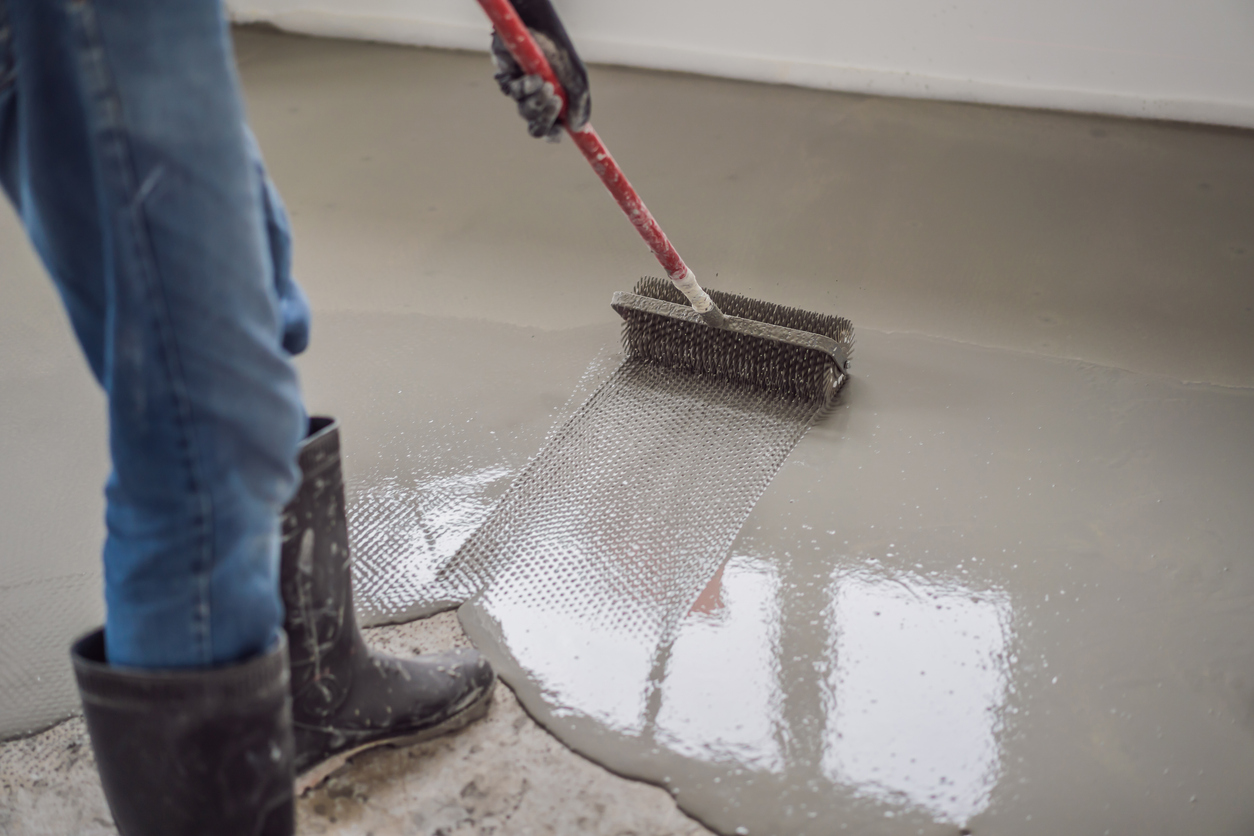
Custom Finishes for Every Garage
Epoxy garage flooring comes in three finishes, and the system gets settled before the finish does. All three below build on either resin family, and they sit alongside the rest of our garage flooring options.
Decorative Flake Systems
Vinyl chips broadcast into a wet base coat and locked under clear. Flake epoxy garage flooring suits any garage that also holds bikes, a bench and the recycling. The chip pattern hides dust between cleanings and adds enough texture that a wet boot grips on the step down from the mudroom. Chip size shifts the look more than color does. Bigger chips read as terrazzo and smaller ones read as granite.
Solid Color Epoxy Coatings
Solid color epoxy garage flooring means one color and no chips, maximum light back into the room, and minimum tolerance for anything left on the surface. It suits a garage holding two cars and not much else. Put solid light gray in a working garage and you will see every footprint by Wednesday.
Metallic Epoxy Finishes
Pigment suspended in clear resin and worked while wet, so the color moves and pools. No two floors match, which people like, and which also means you are approving a technique rather than a sample. Metallic epoxy garage flooring is best where the garage doubles as display space.
How Long Your Garage Is Out of Use
Decision three: the schedule. This is the one people underestimate. The cars stay outside for the whole install and the whole cure, and the cure runs longer than the install. A full epoxy garage flooring build puts a garage out of use for several days, from first grind to first parking, and walking on it returns sooner than parking on it. Polyaspartic shortens that window considerably, which accounts for most of the extra material cost. Ask for both dates at the estimate, because the cure date shapes your week more than the install date does.
Two consequences are specific to Lexington. If there is a finished room over the garage, ask about odor before booking epoxy garage flooring. Standard epoxy smells strongly of solvent at first and it will find an interior door, so low-odor and low-VOC systems are worth asking about when a bedroom sits above. If the driveway is short, or the street has a winter parking ban, work out where the cars go before install week rather than the night before.
FAQs About Our Epoxy Garage Flooring
What is the real difference between epoxy and polyaspartic, and does polyaspartic justify the extra money?
Epoxy builds thicker, costs less per square foot, and cures slowly, so the garage stays out of use for several days. Polyaspartic cures in hours, tolerates colder concrete so the installing season stretches, and holds color better under sunlight. It costs more. Choose polyaspartic when the schedule matters, when you want work done in the shoulder seasons, or when the garage door faces the sun and stands open. Choose epoxy when you have the days and want maximum film for the money. Many of the best floors combine them, with an epoxy body and a polyaspartic clear.
My last floor came up in patches shaped like tires. What went wrong, and can it be fixed?
That is hot-tire pickup. Warm rubber softens any coating that is too thin or poorly keyed into the concrete, then lifts it as you pull out. Two causes account for nearly all of it: acid etching where grinding belonged, and film laid too thin. It is fixable, though not by coating over it. The whole floor gets ground back through the failed material, which takes longer than grinding bare concrete, then rebuilt properly. Ask whoever quotes the repair whether they plan to grind the entire floor or only the failed areas. Only the failed areas means you will have this conversation again.
Our garage is attached and a bedroom sits above it. How bad are the dust and the smell?
Dust is manageable and odor needs planning. Grinding dust is controlled at the machine, so the silica stays in the garage rather than moving through the house. Odor comes from the product rather than the technique. Standard epoxy smells strongly of solvent while it cures, and it gets past a closed door. With a bedroom directly above, ask for a low-odor or low-VOC system, or plan a night away. Mention that room when you book rather than on install day.
How many days will our cars be outside?
A full epoxy garage flooring build runs several days end to end: prep and grind, base coat, topcoat, cure. You can usually walk on it before you park on it, and the parking date is the one that matters. Polyaspartic compresses that considerably. Ask for both dates at the estimate, because the cure date shapes your week more than the install date does.
We put interlocking plastic tiles down a few years ago. What is under them?
Usually a slab in better condition than the floor around it, because those tiles kept salt water off. Often there is ring staining too, where water crept underneath and could not dry. Tiles lift easily and leave no adhesive, so prep goes quickly. The thing to check is whether moisture was getting trapped under them, which points to concrete passing moisture up from below and changes the primer under the epoxy garage flooring. Roll-out mats tell the same story with a stronger smell.
Will a coated floor ever need doing again, and what does that involve?
The clear topcoat on epoxy garage flooring wears out by design, which is the point of it, and it can be replaced without touching what sits underneath. Recoating means lightly abrading the existing surface and laying fresh clear. It costs a fraction of the original job, because none of the grinding, crack repair or base work repeats. The color and the flake stay as they are.
Do you coat the apron outside the garage door too, so the line does not show?
Usually not, and the reason matters. That strip outside the door takes direct UV, standing water and a snow shovel, and it moves with frost differently from the interior slab. Most interior coatings carry no outdoor warranty. The usual answer is to terminate the coating in a deliberate straight line at the door, cut into the slab where the detail calls for it. That keeps the edge clean rather than letting it chip ragged. Wanting the apron done means a different product and a separate conversation.
What a Coated Floor Changes About the Room
Epoxy garage flooring changes what you are willing to put in the room. On bare concrete the bike leans against a wall and the tool chest stays on casters, because moving it scrapes. On a sealed floor you can lay out zones and keep them. Cars here. Bench there. Seasonal storage on the wall above hood height. The floor becomes the layer everything else references.
Improved Lighting and Organization
A light floor gets far more out of two ceiling fixtures at bench height, because most of what you see down there arrives as bounced light. If wall storage or cabinets are going in as well, schedule them after the epoxy garage flooring cures. Anchoring into a wall over a finished floor is easy. Coating around cabinet bases already in place leaves an edge you notice every time you sweep.
Get a Free Quote in Lexington, MA
Tell us the garage size, whether finished space sits above it, and whether anyone ever coated or painted that slab before. Those three answers get you most of the way to a real number. A garage flooring contractor can then look at the concrete and say which epoxy garage flooring system belongs on it, and how many days the cars sleep outside. We do the same work in Newton and Andover.
Call (603) 865-1444 or use the form on this page.