
You know the drill. The forecast starts throwing around words like “coastal low” and “plowable snow,” and your car is sitting in the driveway because the garage is full of everything except a vehicle. The next morning you’re out at 6 a.m. chipping ice off the windshield while your neighbor backs out of a warm, dry garage.
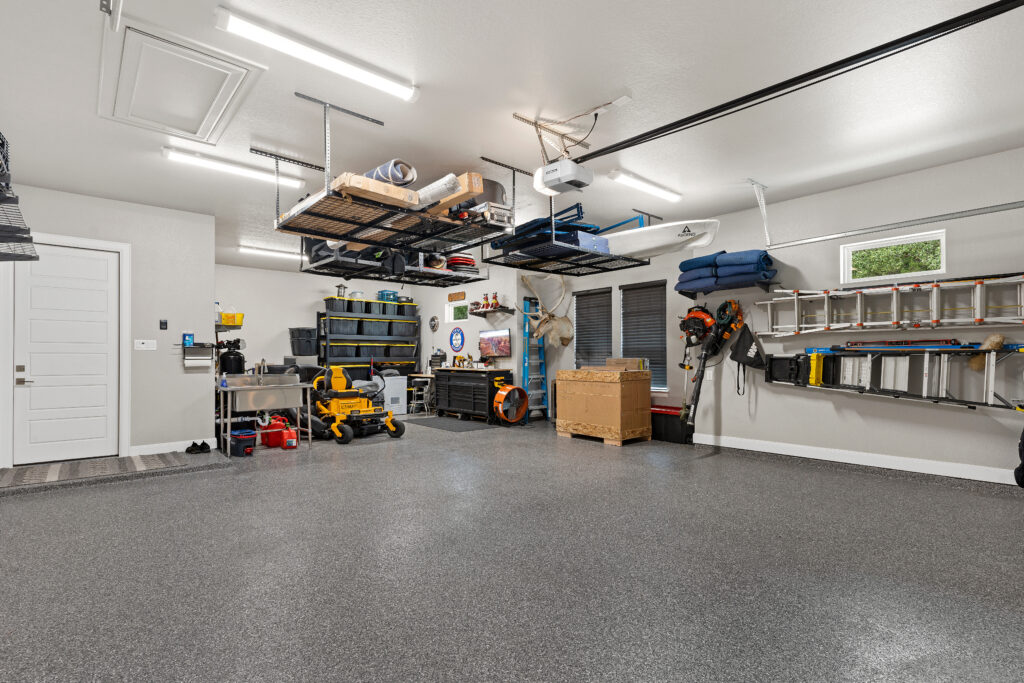
Here’s the direct answer: for most Salem homes, the fastest way to get a car back inside is overhead garage storage. Ceiling-mounted racks move the bins, holiday decorations, and seasonal bulk that eat your parking bay up into the one space nothing else is using, the air above your hood and garage door tracks. In a single afternoon of installation, a couple of racks can clear enough floor to park a full-size SUV. Nothing else in a garage buys back square footage that fast, which is why overhead garage storage is where we start almost every fall project.
The catch is that overhead garage storage only works well when it’s planned. Weight ratings, ceiling attachment, clearance above the garage door, and what you actually put up there all matter in a region where winter arrives fast and stays. This guide walks through how to plan it right before the first nor’easter rolls up the coast.
If you’d rather talk it through with someone who measures garages for a living, Mad Garages And Closets offers a free design consultation at your home. No pressure, just a plan for your space and an honest read on how much overhead garage storage your ceiling can carry.
Shelving and cabinets are wonderful, but they still occupy floor and wall space. Overhead garage storage is different because it uses volume nothing else can claim. A typical two-car garage in Salem has an eight or nine foot ceiling, and the zone above the garage door and your car’s roofline usually sits completely empty. That empty band is the entire premise of overhead garage storage.
Quality ceiling racks put that zone to work. The Salem overhead racks we install at Mad Garages And Closets are steel, attach at four mounting locations into trusses and walls, and hold up to 1,000 pounds per rack. Each rack includes a 2-inch safety lip so bins can’t slide off, and the height is adjustable as your storage needs change. For gear you’d rather not climb a ladder for, there’s also a motorized overhead garage storage lift built on four industrial-grade motors, with a 350-pound capacity, controlled from your smartphone and backed by a lifetime warranty.
That capacity math matters. A season’s worth of totes, a rooftop cargo box, camping gear, and patio cushions might total 300 to 400 pounds. Two anchored racks handle that with a wide margin, which is why overhead garage storage rarely runs out of capacity before it runs out of ceiling.
The best candidates for overhead garage storage are light to medium weight, sealed, and seasonal. Think labeled plastic totes of holiday decorations, sleeping bags and tents, coolers, beach chairs, luggage, and the rooftop carrier that only comes down twice a year. Sealed bins also shrug off the temperature swings of an unheated New England garage far better than cardboard, which absorbs moisture and sags.
A few things should never go on a ceiling rack, no matter how strong it is:
One more habit worth building: load each rack evenly, heaviest bins closest to the mounting points, so you can see and reach what’s up there safely. Good overhead garage storage habits matter as much as good hardware.
The number one mistake with do-it-yourself ceiling racks is hanging them where the garage door needs to go. The open door rests on horizontal tracks that hang below the ceiling, so a rack that looks fine with the door closed can block it the first time you hit the opener.
Before anything gets mounted, measure three things: ceiling height, the gap between the ceiling and the top of the open door, and the height of your tallest vehicle including roof rails. That gap above the open door is prime rack territory. Elsewhere, racks should hang low enough to reach but high enough to clear whatever parks beneath them. Because the Salem overhead racks we install are height-adjustable, the same hardware works for a low sedan or a lifted pickup, and there are Bluetooth-motorized lifters for bikes and Jeep hardtops.
Ceiling structure matters just as much. Racks need to anchor into framing, not drywall alone, with attachment points hitting trusses or joists squarely. This is where a professional install earns its keep: an under-anchored rack holding 500 pounds is not a problem you want to discover in January, and it’s the one part of overhead garage storage nobody should improvise.
Nor’easters are powerful coastal storms that can bury southern New Hampshire quickly, and the National Weather Service notes that while they can occur at any time of year, they are most frequent and most violent between September and April. Around Salem, the first real threat usually arrives between late November and January, which makes October the right month for nor’easter garage prep rather than a December scramble.
A realistic timeline: in early October, sort the garage floor into three piles, overhead candidates, shelf and cabinet items, and a donation run. Mid-October, get racks measured and installed, a one-day job for most garages. By Halloween, everything seasonal is up and you’ve actually pulled the car in and closed the door to prove it fits. That last step catches mirror and bumper surprises while there’s still time to adjust, and it’s the only real test of whether your overhead garage storage plan worked.
There’s a legal wrinkle that makes the deadline more than a comfort issue. Salem enforces a winter parking ban from November 15 through April 15. During those months no vehicle may sit unattended on any street between midnight and 6 a.m., or at any time during a declared snow emergency, and the town also clears streets of unattended vehicles once snowfall reaches three inches. On-street parking stops being a fallback exactly when you need one most. A cleared garage bay isn’t just convenient during a storm. It’s the only legal overnight spot you have.
Ask anyone who’s reclaimed their bay what changed. No more scraping ice before work. No more digging out a car the plow buried at the end of the driveway. Your defroster clears glass in seconds instead of minutes because the car starts above freezing.
The mechanical benefits are just as real. Cold starts are hard on batteries, and a battery that cranks fine at 50 degrees can struggle at 5 below. The car in garage winter list keeps going: fluids stay warmer, wiper blades don’t freeze to the glass, and door seals don’t ice shut. Parking inside even limits how long road salt sits wet on your undercarriage, since the car dries out between drives. The totes overhead don’t care about the cold. Your car does, and that trade is the whole argument for overhead garage storage.
The steel racks Mad Garages And Closets installs hold up to 1,000 pounds per rack, anchored at four points into ceiling trusses and walls, with a 2-inch safety lip to keep bins in place. The motorized lift carries a 350-pound capacity and a lifetime warranty.
Almost always. Height-adjustable racks tune to standard eight and nine foot ceilings as well as taller bays. The key variables are your open garage door position and vehicle height, which a design consultation measures before anything is ordered.
Yes, that’s the point. Racks hang high enough to clear your vehicle, and the smartest layouts put storage over the garage door tracks and along ceiling edges, with the heaviest items off to the sides rather than directly above where you park.
Most overhead garage storage installations finish in a single visit. Projects that add cabinets and shelving or flooring take longer, and fall calendars fill quickly, so October booking is smart if the goal is a car in the garage before winter weather arrives.
Mad Garages And Closets designs and installs overhead garage storage, cabinets, shelving, slatwall, and epoxy flooring for homeowners in Salem, New Hampshire and the surrounding region, from our home base on Industrial Way in Salem. We’ll measure your ceiling, plan clearances around your door and vehicles, and hang racks built to hold everything currently holding your parking spot hostage. Browse our project gallery to see what a cleared bay looks like in real garages.
The first nor’easter of the season never sends a save-the-date. Reach out to schedule your free consultation and get your car back where it belongs before the snowbanks decide for you.

Scott Lannon is the founder and owner of Mad Garages And Closets, a custom storage company based in Salem, New Hampshire, with a second location in Tyngsborough, Massachusetts. Scott has worked in the home organization industry since 2001, and he named the company after his daughter, Madilyn. He and his team design and install custom garage cabinets, shelving, slatwall, overhead storage, and epoxy and tile flooring, along with walk-in and reach-in closets, kitchen pantries, home offices, laundry rooms, and Murphy beds for homeowners across New Hampshire and Massachusetts. Scott’s approach starts with the customer’s own goals for their home, then delivers storage that is beautiful, sturdy, and cost-effective. On the blog, he shares ideas and practical advice for turning cluttered garages and closets into organized spaces that actually work for the way families live.