
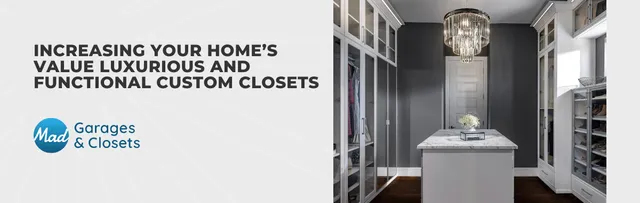
Closets are one of the few upgrades where the money you spend and the home value you get back never quite line up on paper. A kitchen shows up in your comps. A finished basement shows up in your square footage. Custom closets show up in neither, and yet agents keep telling sellers to build them.
This post walks through the actual mechanism. What an appraiser can and cannot count. What a buyer reacts to in a ten-minute walkthrough. What a listing photo does with a finished closet, and how to decide whether the home value justifies the spend in your house. If your interest is the parts rather than the payback, our home organization pages cover those.
What an Appraiser Counts, and What They Do Not
Start with the disappointing part. Custom closets add no square footage, so they will not move a number the way an addition does. Whether built-in storage earns anything on your appraisal is a question for your agent or your appraiser, because it depends on how they handle condition and quality adjustments against your comparable sales. What we can tell you is that any article promising you a specific percentage of home value back is guessing.
Where custom closets do their work is inside the comparison. Your house and the one that sold down the street are the same age, same layout, same condition, and finished detail is what separates them. Appraisers and agents see hundreds of houses a year, and they notice which ones solved storage. Ask your agent to point yours out on the walkthrough rather than hoping it registers on its own.
What a Buyer Notices in Ten Seconds
Buyers open closets. Every one of them, in every bedroom, usually within a minute of walking in. That is the most reliable behaviour at a showing, and closets are the part of the house sellers most often leave untouched.
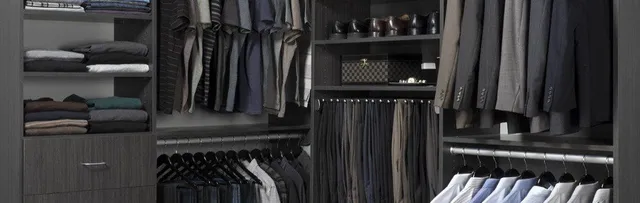
In those ten seconds they are answering one question. Does this house have room for my things. A closet packed to the rail, with a wire shelf bowing under sweaters, answers badly no matter how big the house is. The same closet with a double-hang section, a shelf stack and visible empty space answers well, and that answer is where custom closets start earning their keep against home value.
Closets also photograph in a particular way. A reach-in with a plain rod does not photograph at all, which is why you never see one in a listing. A finished closet interior earns its own frame in the photo set, and it earns it for free, because your photographer is already standing in that room.
Design It for Yourself, With One Eye on the Next Owner
Custom closets designed around a specific wardrobe beat a generic build, and they keep beating it after the wardrobe changes owners. You get both by keeping the fixed parts neutral and putting the personality into the parts that move.
Adjustable shelves, movable rods and a drawer bank that can be reconfigured all read as flexible to a buyer. A wall of fixed cubbies sized for one collection of handbags reads as somebody else’s closet. A buyer who cannot picture their own things in it mentally subtracts the cost of tearing it out. That subtraction is the one way custom closets can work against your home value rather than for it.
Three things buyers respond to consistently, none of them expensive. A full-length mirror, or a wall to hang one on. Lighting that needs no pull chain. A shoe section sized to what your household actually owns. If the budget only stretches to part of the plan, those hold home value across owners better than a specialty insert does.
Storage Complaints Are What Kill an Offer
Ask an agent why a buyer passed and not enough storage comes up more than almost anything except price and location. It is a hard objection to argue with, because that buyer is not comparing your house to the market. They are comparing it to the pile of things they already own. HGTV makes the same point about cluttered closets signalling a space problem.
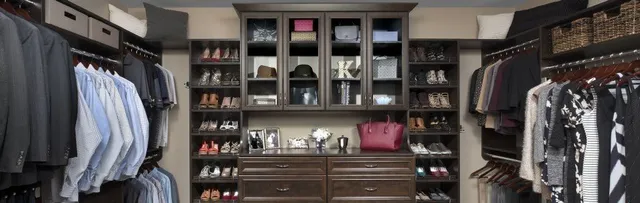
Custom closets add no storage volume, and no home value on their own. What they do is make the volume you already have legible. Two rods where there was one roughly doubles hanging capacity in a standard reach-in without moving a wall. Shelves at the right heights get stacked bins off the floor, and floor space is what a buyer actually sees when they open a door. If your house is small and buyers are comparing it to bigger ones, this is the cheapest way to answer the objection before anyone raises it. It is also the clearest link between custom closets and home value.
If You Are Not Selling for Ten Years
Most people reading this are not listing in spring. They are deciding whether to spend money on a house they intend to keep, and home value is the excuse they are using to justify it.
The honest framing is that you will use custom closets every single morning for a decade, and value at sale is a bonus on top. A system built from thermally fused laminate, with soft-close hinges and full-extension slides, still works in ten years with nothing done to it but a damp cloth. Most renovations cannot say that.
The Short Version
Custom closets will not add a line to your appraisal. They change how a buyer reads your house, they give your listing photos a room they would otherwise skip, and they answer the storage objection before your agent has to raise it. That is the honest case for home value.
If you are staying put, treat it as a daily-use upgrade that happens to hold its home value. If you are selling within the year, put the money in your primary bedroom closet and nowhere else. For a number on your own house, a designer can measure your closets and price the options in one visit.
Custom Closets and Home Value: Common Questions
When we sell, does the closet system stay with the house or can we take it with us?
Ask your agent or your real estate attorney, because the answer lives in your purchase and sale agreement rather than in a general rule. What we can tell you is the practical side. Those panels were cut for that room’s exact dimensions, so they would not fit anywhere else even if you did take them. With custom closets, freestanding pieces are the only realistic candidates, and anything you intend to keep has to be written into the contract before you sign.
Will an appraiser add anything for custom closets?
That is worth putting to your agent or your appraiser directly, since it depends on how they treat condition and quality against your comparable sales. What you can control is whether the work gets seen, which is where any home value argument has to start. Leave your design drawing and the invoice with your agent, and make sure whoever is valuing the house opens those doors rather than walking past them. Be sceptical of any source quoting a specific return percentage on closets, because that is not a figure anybody measures.
We are listing in the spring and can only afford one closet. Which one?
The primary bedroom closet, every time. That is where custom closets do the most for home value. Buyers open it with the most attention, your listing photographer will actually shoot it, and it is the room where the storage question gets settled in a buyer’s head. A hall closet or a child’s reach-in improves your life and changes nobody’s offer. If the budget survives the primary, spend the next dollar on lighting in the other closets rather than building them out.
Does turning a small spare bedroom into a dressing room hurt us at sale?
It can, and bedroom count is the mechanism. A three-bedroom house listed as a two with a dressing room gets priced against two-bedroom comparables, and that gap is usually wider than anything a dressing room adds to home value. The safer version is a conversion that reverses. Freestanding or unfastened units, closet and door left intact, and nothing done to the window. Then it shows as a dressing room and sells as a bedroom.
Do custom closets raise our property assessment?
Call your town assessor’s office, because that is the only reliable answer. Assessment practice varies by municipality and by when your town last ran a full revaluation, so a general rule is not much use to you here. It is a short phone call, and worth making before you set a budget for custom closets.
Will a very personalised closet narrow the pool of buyers?
A specialty insert built for one particular collection can, because a buyer who owns nothing like it sees a component they will remove. A well-built system does not, because adjustable shelving and movable rods read as adaptable to anyone standing in the doorway. The rule of thumb is that personality goes into the pieces that move and the fixed structure stays neutral. That is what keeps home value intact across owners.
How long before listing should this be done?
Before your photographer comes, which in practice means well ahead of your listing going live, and further ahead again if you also want the closets emptied and staged. Doing it after photos means paying for home value your listing never shows. Ask for the current lead time when you book the design appointment, so fabrication and install both fit in front of your photo date.